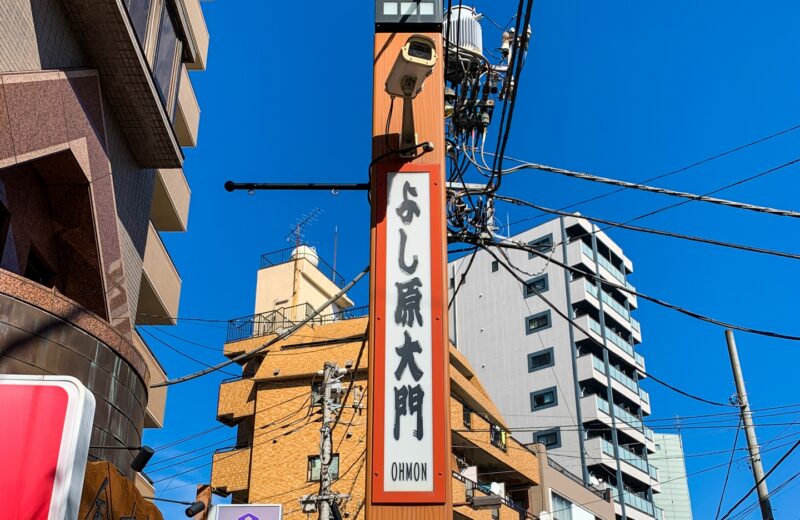
YOSHIWARA

History of Yoshiwara

STORY

The Culture Yoshiwara Has Woven, and Its Future

Where Edo’s cultures once crossed, and the arts still live on

Just a little north of the bustle of Asakusa lies Yoshiwara, where the people of Edo once came and went, and where a distinctive culture and performing arts took root.

In the Edo period, Yoshiwara flourished as the shogunate’s officially licensed pleasure quarter. It was a place of entertainment, but also a crossroads of many cultures: fashion, the performing arts, literature, publishing, and more. Behind that splendid culture lies the history of people who lived under harsh circumstances. Yoshiwara is a town of both light and shadow. The face of the town has changed greatly with the times. Even so, some of the arts once polished here have been passed from person to person, and are still alive today.

What is the culture that Yoshiwara has nurtured? And where will that culture go from here? Here is the story of Yoshiwara, running from the past to the present, and on into the future.

The History of Yoshiwara

01|The History of Yoshiwara

Where Edo’s cultures cross

Yoshiwara, born alongside the growth of Edo

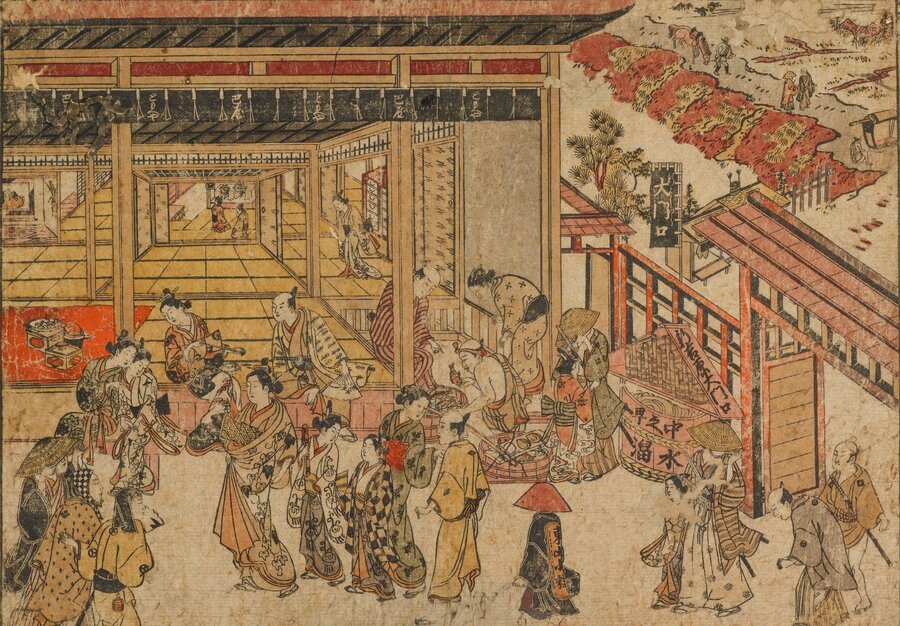
The history of Yoshiwara goes back to the early 17th century, when the city of Edo began to grow in earnest. After the Tokugawa shogunate was established, Edo’s population rose, and commerce and culture developed. In that setting, the Yoshiwara pleasure quarter was created to gather brothels into a single designated area under the shogunate’s control. In 1617, permission was granted to set up a quarter around Fukiya-chō, near Nihonbashi, and the town later known as “Moto-Yoshiwara” (Old Yoshiwara) took shape. As Edo’s urban area expanded, Yoshiwara was ordered to move to the outskirts. In 1657, the year the Great Fire of Meireki struck Edo, it relocated to its present site, north of Sensō-ji Temple and near Nihon-zutsumi. This is “Shin-Yoshiwara” (New Yoshiwara).

  1. 1603Keichō 8The Edo shogunate is established
  2. 1612Keichō 17Shōji Jinemon and others petition to set up a licensed quarter
  3. 1617Genna 3Permission is granted, with conditions. “Yoshiwara” is born around Fukiya-chō
  4. 1657Meireki 3The Great Fire of Meireki. Yoshiwara moves north of Sensō-ji, near Nihon-zutsumi, becoming “Shin-Yoshiwara”
  5. 1773An’ei 2Tsutaya Jūzaburō opens his bookshop, Kōshodō, in front of the Ōmon gate
  6. 1958Shōwa 33The Anti-Prostitution Law takes full effect, closing the history of the licensed quarter

The bustle of Asakusa, and the prosperity of Yoshiwara

In those days, Asakusa was a pleasure-ground of Edo that drew many visitors, centered on pilgrimages to Sensō-ji. Shin-Yoshiwara lay farther north still, beyond the bustle of Asakusa, reached by way of Nihon-zutsumi, a space unlike the everyday town. The quarter had a distinctive layout: it was surrounded by a moat, and its only entrance was the Ōmon gate. Inside were rules, manners, dress, and seasonal events different from those of the outside world. Known as the only officially licensed pleasure quarter in Edo, Yoshiwara became a place visited by all kinds of people, starting with samurai and merchants.

One phrase used to describe Edo’s prosperity is “Edo sanzenryō,” or “Edo’s three thousand ryō.” It expresses the idea that a thousand ryō a day changed hands in each of three places: the fish market, the theater district, and Yoshiwara. It is not a statistic of actual transactions, but it shows how large a presence Yoshiwara had in Edo’s economy and in the public imagination.

A place that cannot be described by entertainment alone

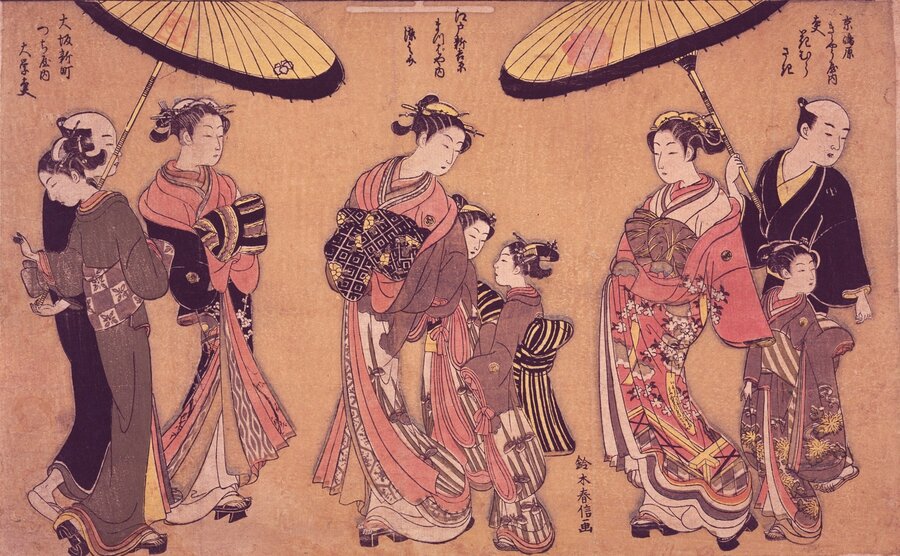
Yoshiwara had a cultural side that entertainment alone cannot explain. High-ranking courtesans were expected to have many accomplishments: beyond appearance and dress, they needed skill in the arts, education, and the way they received guests. Seasonal events and elaborate hospitality were also part of what shaped the world of Yoshiwara. People gathered, conversed, and exchanged news and trends. Yoshiwara became deeply tied to Edo’s social life and culture.

Yet that splendor was not given equally to everyone who lived in Yoshiwara.

That it was a place built on strict social status and rules is also an essential part of understanding Yoshiwara’s history.

Historic Sites Site of the Yoshiwara Great Gate (Yoshiwara daimon) See details →
Roots of the Hanayanagi Culture

02|Roots of the Hanayanagi Culture

Edo’s sense of beauty, and the art of hospitality

Edo’s trends, spreading out from Yoshiwara

For the people of Edo, Yoshiwara was also a place that reflected a world different from everyday life: the courtesans’ clothing and hairstyles, splendid events, refined manners. High-ranking courtesans in particular drew people’s admiration and interest, and became subjects of ukiyo-e prints and popular reading. Yoshiwara also appeared on the kabuki stage. Stories set in Yoshiwara, and works portraying the people who lived there, made its name widely known even to people who had never visited. Yoshiwara was a place where culture gathered, and at the same time a place that sent new trends and stories out into the city of Edo.

Yoshiwara, the cradle of publishing culture, and Tsutaya Jūzaburō

One figure who symbolizes that spread of culture is Tsutaya Jūzaburō, a leading publisher of Edo. Raised in Yoshiwara, he stepped into the world of publishing through work connected with “Yoshiwara Saiken,” a guidebook to the pleasure quarter. “Yoshiwara Saiken” listed the town’s streets, the brothels, the names of the courtesans, and more. It gave practical information to visitors and was also a publication that conveyed the culture of Yoshiwara itself. Tsutaya Jūzaburō later widened his activities to the city of Edo, working with many artists and writers and contributing greatly to the growth of publishing culture. Yoshiwara’s culture did not stay within the town. Through encounters and exchanges between people, it connected to Edo’s art, literature, and trends.

People who lived by their art, distinct from the courtesans

There is one more presence that cannot be left out when speaking of Yoshiwara’s culture: the “geisha.” In Edo-period Yoshiwara, apart from the courtesans, there were geisha who livened the banquet room with song, shamisen, dance, and other arts. Courtesans also had training in the arts and education, but geisha came to be distinguished as specialists in the arts. In Yoshiwara, certain rules and systems were set for geisha activities, and a culture developed of polishing the arts themselves and presenting them at occasions of hospitality. To entertain people, they sharpened their skills and delivered their art to suit the guest and the occasion. This was a unique world in which art and social life were joined, going beyond simply performing a repertoire.

Yoshiwara, and hanayanagi culture across Japan

Today, “GEISHA” is widely known abroad as one of the cultures that symbolize Japan. The hanamachi (geisha districts) across Japan each have their own history of formation and their own performing-arts character. For that reason, not every geisha culture began in Yoshiwara. At the same time, it is a history not to be overlooked that Yoshiwara was a place deeply involved in the formation and growth of Edo’s geisha culture. People who specialized in the arts gathered in Yoshiwara, polished one another’s skills, and developed the performing arts that grace the banquet room. Some of the pieces and the sense of beauty nurtured there spread beyond Yoshiwara and came to be loved in other hanayanagi (flower-and-willow) circles. The history of Yoshiwara is the history of Edo’s licensed quarter, and at the same time an important chapter in thinking about Japan’s hanayanagi culture.

Performing Arts Passed Down

03|Performing Arts Passed Down

From person to person, Yoshiwara’s arts continue today

The world of arts unique to Yoshiwara

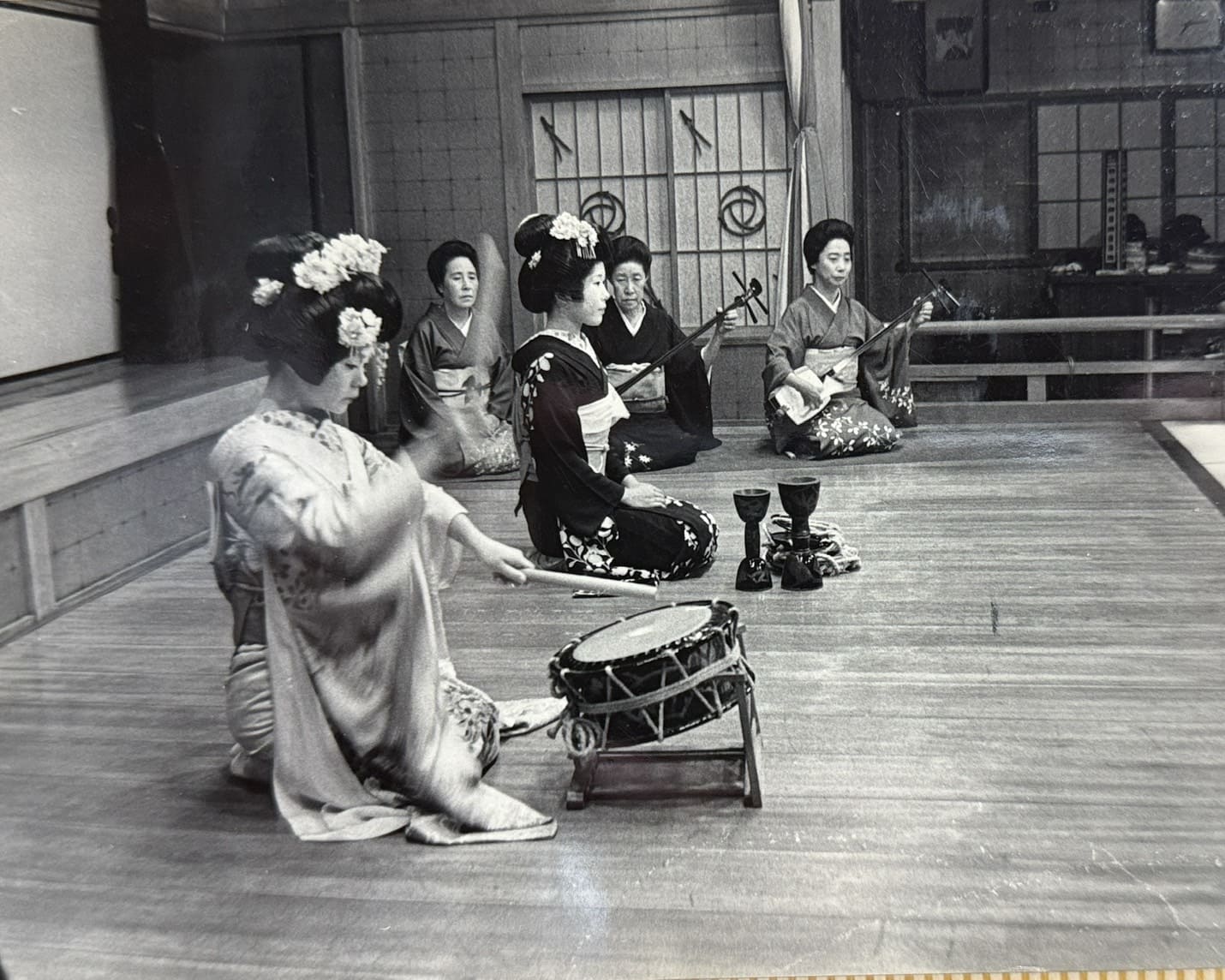
In the banquet rooms of Yoshiwara, a variety of arts were once performed: song, shamisen, dance, and accompanying instruments (narimono). These performing arts entertained the people gathered, and at times expressed the feelings of a season or a celebration. They were an important element that colored Yoshiwara’s culture. Among these arts are some that developed with distinctive features in Yoshiwara, and some that have been handed down by the people of the area.

Yoshiwara Sawagi | An art that brightens the banquet room

“Sawagi” is a piece closely tied to Yoshiwara’s hanayanagi culture. Its light rhythm and lively singing and playing make the atmosphere of the banquet room even more festive. This art, long loved in Yoshiwara, also spread to other hanayanagi circles and is still performed in many settings today. Even for the same piece, the expression differs by region and by performer. The “Sawagi” handed down in Yoshiwara carries a distinctive character and artistic tradition cultivated in this place.

Nichō-tsuzumi | An art in which one person plays two drums

“Nichō-tsuzumi” is played by one person on two drums, the ōtsuzumi and the kotsuzumi. It combines two drums of different tone to create skillful rhythms. This art, which demands advanced technique, was handed down by Yoshiwara’s geisha. There was a time when continuing it became difficult, but under the bearers who have kept the art alive, instruction for the next generation is now under way. In the layering of sound from the two drums are the skill polished by years of practice and the feelings of the people who carry the art forward.

Kiyari | An art unique to Yoshiwara, sung on by women

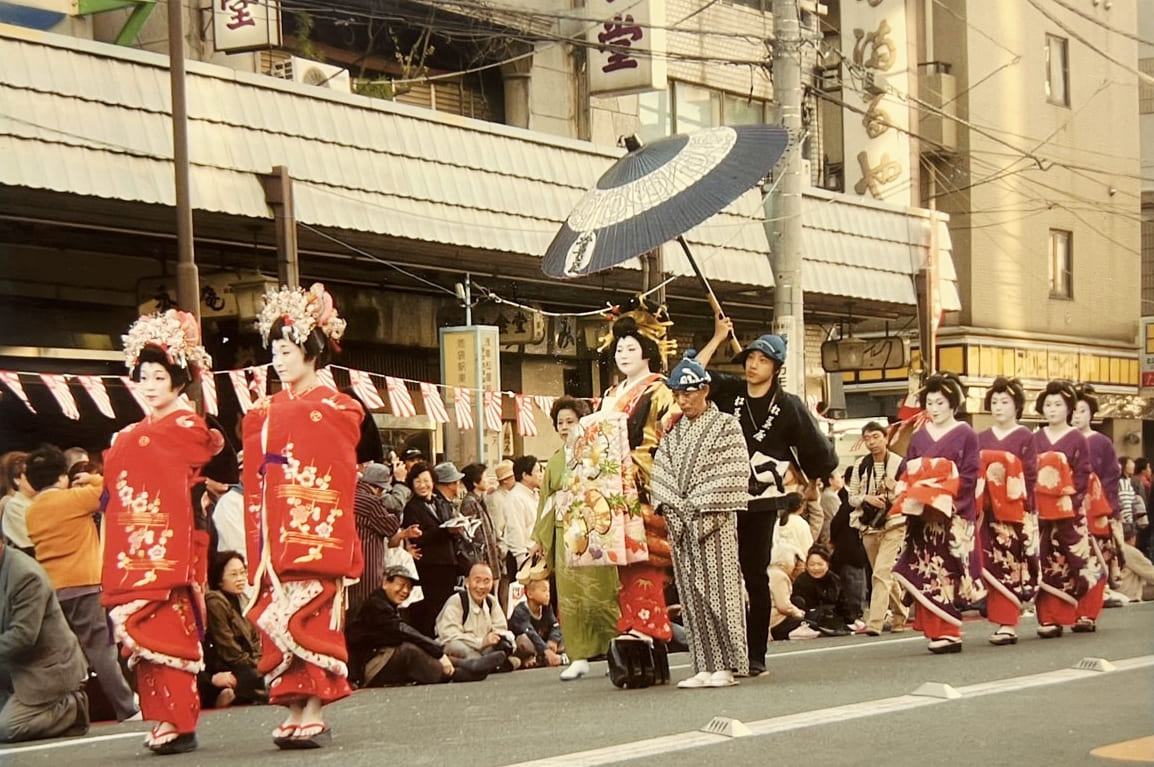
Kiyari was originally a work song, sung by people moving large timbers and the like to keep their breathing in time. In Edo it was handed down by the tobi (fire-brigade and construction) craftsmen, and came to be performed at festivals and celebrations as well. Edo Kiyari is generally closely tied to the culture of male craftsmen, but in Yoshiwara a distinctive culture grew in which female geisha sang Kiyari. It is said to have been performed during Yoshiwara’s processions too, and the art has been handed down as “Yoshiwara Kiyari.” Within its powerful sound lives an expression particular to the women geisha. Yoshiwara Kiyari is one of the arts unique to Yoshiwara, where Edo’s craftsman culture and hanayanagi culture meet.

The people who protect the arts and pass them to the next generation

With the changing of the times, Yoshiwara’s hanayanagi world lost its former form, and opportunities to perform the arts grew fewer. Arts polished over a long time die out if no one carries them on. Even so, in Yoshiwara there are people who have kept protecting them.

Starting with the Edo Yoshiwara Traditional Performing Arts Association, bearers and local people are working not only to perform the arts but also to teach the next generation. Receiving that teaching, young bearers keep up their practice and are beginning their paths as new performers. An art cannot be fully passed on through records and video alone: how to produce the sound, how to time the pauses, the movements, the atmosphere of the occasion. It is handed down little by little as teacher and student face each other and repeat it again and again. Now that few remain who knew the Yoshiwara of the past, the people who pass on these arts are the most important bearers of its culture.

Geisha district Asakusa Kenban (Tokyo Asakusa Union) Address3-33-5 Asakusa, Taito City, Tokyo TEL03-3874-3131 See details →
Yoshiwara Today

04|Yoshiwara Today

Facing history, and connecting to the future

A town that has carried light and shadow together

Alongside its splendid culture, Yoshiwara’s history has aspects that must not be forgotten. The licensed quarter was also a place where women’s freedom was greatly restricted. There were people who left their families and hometowns, could not choose how to live by their own will alone, and lived in harsh conditions.

While high-ranking courtesans drew attention through splendid dress and the arts, the days of many women were by no means splendid. The culture nurtured in Yoshiwara cannot be considered apart from this social system.

Yoshiwara continued as a licensed quarter after the Meiji era, and changed its character with the times. In 1958, the full enforcement of the Anti-Prostitution Law closed the history of the officially licensed quarter. The town continued to change after that, and the former hanayanagi world gradually disappeared. Yoshiwara has both a culture worth valuing and a history that must continue to be faced. Rather than taking up only one or the other, knowing this overlapping history leads to understanding the town.

Yoshiwara as a town where people live

Today’s Yoshiwara keeps traces of the former licensed quarter, yet it is a town where people go about their daily lives. There are historic temples and shrines and local businesses, there are homes, and there are people who live in the area. At the same time, Yoshiwara still has an aspect as a nightlife district, and it is also a fact that people take its history and present state in many different ways.

How to see Yoshiwara, and what kind of town to make it: there is more than one answer. Even so, learning about the culture handed down in this land and reconsidering its value may become one occasion for thinking about Yoshiwara’s future.

From the culture of the past to the heritage of the community’s future

Now, in Yoshiwara, efforts continue to pass the arts of the past to the next generation: from bearers to young successors, from those who know the arts to those encountering them for the first time. As the arts are handed down, new encounters are born, even for people who never had the chance to come into contact with Yoshiwara’s culture.

Local children learning about Yoshiwara’s arts. The arts that have been handed down being performed at local festivals and events. The people who live in the town feeling that culture as the heritage of their own community. Each of these accumulating steps may lead to a new future for Yoshiwara.

What it means to visit Yoshiwara

Visiting Yoshiwara is not only a search for traces of the former licensed quarter. It means walking the town, learning its history, and listening to the words of the people who have kept the arts alive. And at times, it means touching a part of the arts yourself, and feeling how difficult, deep, and enjoyable they are. There you meet a culture in a way that learning history only as knowledge cannot give you.

Art is something handed down from person to person. As long as that effort continues, Yoshiwara’s culture will not be a thing of the past but a culture that lives in the present. Learn the history, meet the people who pass on the arts, and touch the culture of Yoshiwara. The story of Yoshiwara is still going on.
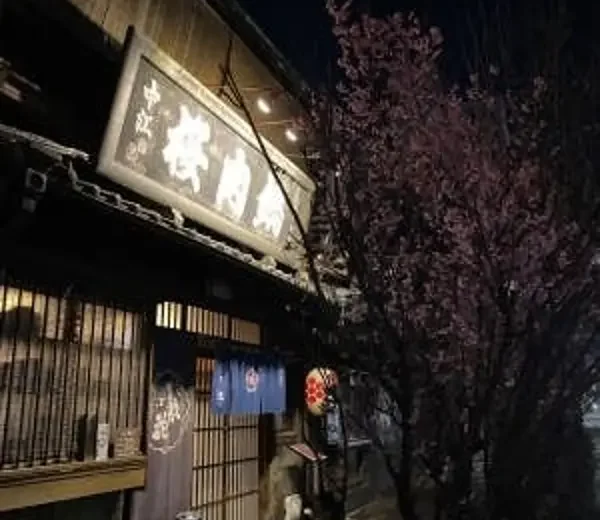
Horse-meat cuisine / Japanese Sakuranabe Nakae – Main Restaurant (since 1905) Tokyo's local cuisine born in Yoshiwara—120 years of sakura-nabe taste and tradition Address1-9-2 Nihonzutsumi, Taito City, Tokyo TEL03-3872-5398 HoursWeekdays 17:00–22:00 / Sat., Sun., holidays 11:30–14:00, 16:00–21:00 ClosedMondays (next Tuesday if Monday is a holiday) See details → Hotel Hotel Za Mikasa Renewed as "Hotel Za Mikasa," with the new "Za Mikasa" banquet space Address4-23-4 Senzoku, Taito City, Tokyo TEL03-3872-3524 HoursCheck-in 13:00 / Check-out 10:30 See details →